Safety Helmet
Requirements
Overview
Why Helmets with Chinstraps Matter
Construction workers sustain more traumatic brain injuries (TBIs) than employees in any other industry in the United States. NIOSH research found that TBIs accounted for 25% of construction fatalities, with more than half of fatal TBIs resulting from falls.
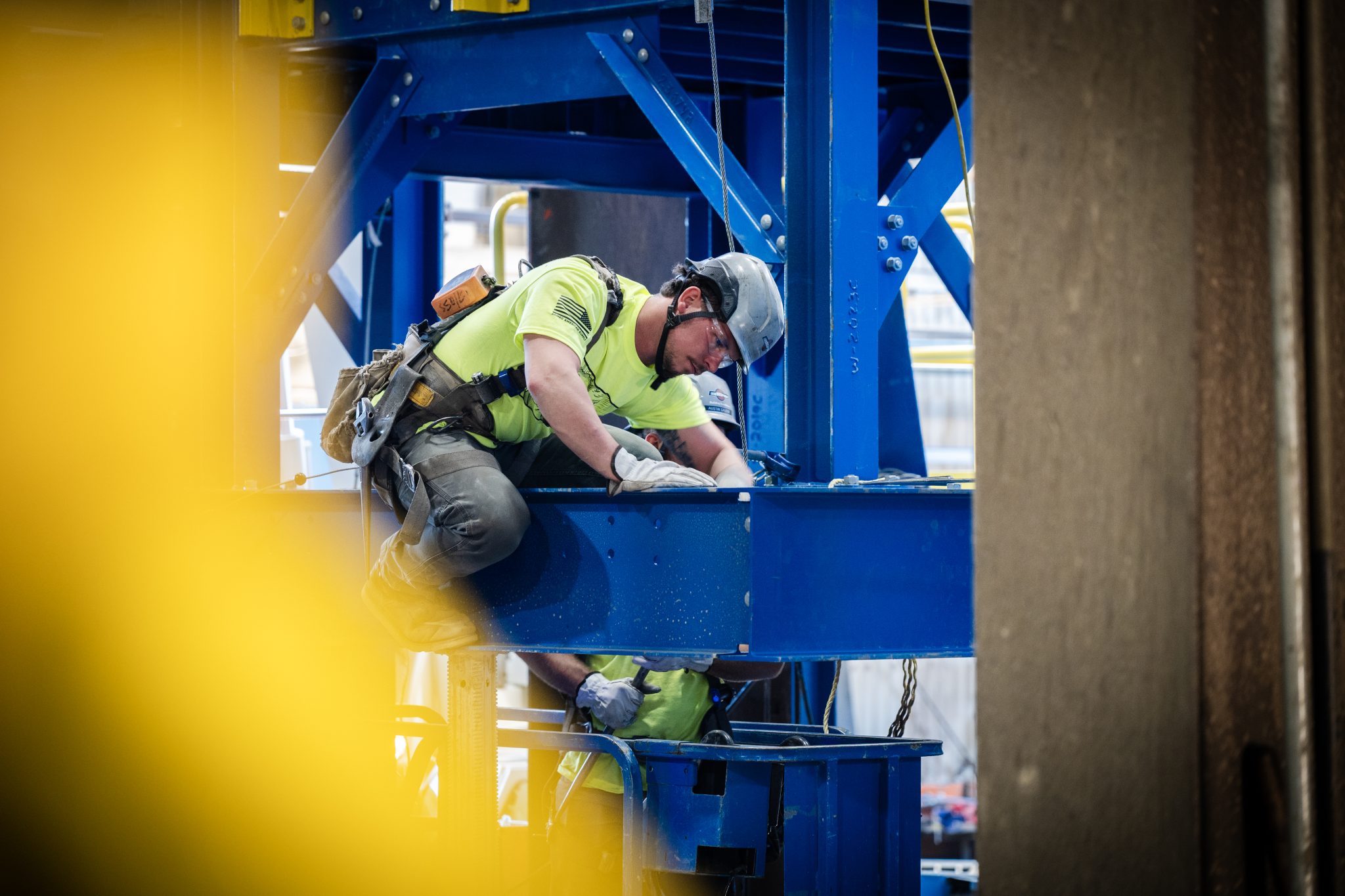
Safety helmets, with the use of chinstraps, dramatically reduce the frequency and severity of TBIs due to their retention systems and ability to better protect the head against front, top, rear, and side impacts and penetration. To expand Miron’s commitment to caring for our subcontractors and their employees, we require all subcontractors, visitors, and vendors to utilize safety helmets with chinstraps. This ensures superior head protection for their employees on our project sites.
Requirements
Protecting What Matters Most
We can’t move the industry forward unless all our employees share a commitment to safety and are held accountable for consistently wearing a safety helmet with the chinstrap fastened. Likewise, we will also require our subcontractors to adopt helmets with chinstraps as part of their daily personal protective equipment (PPE).
We recognize that there are strong feelings both for and against the use of safety helmets with fastened chinstraps. However, we truly believe it is the right thing to do. We care about our team members, and we care about the safety of you and your employees.
Safety helmets must be used with chinstraps fastened, and shall comply with the following:
ANSI Z89.1 (Type 2) or ANSI Z89.1 (Type 1) and EN12492 performance standards 4.2.1.2 (front energy absorption), 4.2.1.3 (side energy absorption), 4.2.1.4 (rear energy absorption), 4.2.3 (retention system strength), and 4.2.4 (retention system effectiveness).
If you have questions about this requirement or about obtaining specific helmet approval, please contact a member of Miron’s Risk Management Department as listed below:
Kevin Hildebrandt, Vice President, Risk Management
kevin.hildebrandt@
Brandon Blank, Director, Risk Management
brandon.blank@
Matt Krause, Director, Risk Management
matt.krause@
In addition to requiring helmets, Miron will continue to evaluate the sources of TBIs and other incidents on our project sites and make program adjustments accordingly. These adjustments may impact Miron-only trades or may include subcontractors. Construction is an ever-changing environment, and we plan to adapt and adjust as needed to ensure the safety of all employees on our project sites. We ask you and your employees to take an active role in safety and risk management and speak up when you see or experience a concern. Together we will continue to stay grounded, think big, rally together, dig deep, and build legacies! Be safe and take care of each other.